


After almost two decades of publishing Wandering Educators, I have come to believe that cultural travel is the most useful phrase in the traveler's vocabulary. It names what most of us actually want from a trip: to learn something from the people and place.
The trouble is that the phrase has been borrowed by tour companies, marketing copywriters, and bucket-list publishers until it nearly means nothing.
So what does cultural travel actually mean? And how do you do it well?

Let's go!
My PhD is in international education. I have lived and worked in Japan and London, and traveled across Europe, Mexico, the Canadian Maritimes, the American South and Midwest, and the Mediterranean. I have directed a summer study abroad program for a Big Ten university and have written about teacher travel, family travel, art travel, study abroad, and global education for nearly twenty years.
You know what? I'm still learning. But I've worked hard to garner cultural travel wisdom over the years on how to be a traveler, not a tourist, and I love to share it.
What cultural travel actually is
Cultural travel is travel where exploring and learning about a place's culture is the point, not the backdrop. It is learning cross-cultural sensitivity, cultural ways of being, history and customs, and making connections with locals. It's incredibly important to teach this kind of educational travel to your kids!
The most familiar form of cultural travel is the one most people already know: visiting historic sites, art museums, and cultural institutions. The Louvre in Paris. The Acropolis in Athens. Stonehenge. These are landmarks of human achievement, and visiting them can become real cultural travel when you arrive with the time and curiosity to actually look.
Want more? Go one layer deeper. You attend a working market, a regional celebration, or a craft workshop. Take a cooking class. One organization I absolutely love is Paris Greeters – you walk with a local and explore neighborhoods, or their favorite things. How great is that? Another way to learn more of a culture while traveling is to watch the ordinary practices of a place as they happen. I love wandering through markets (I’m sure you’ve noticed this, if you’ve been a longtime reader), talking with artists about their work, finding an awesome coffeeshop in a non-touristy neighborhood, and connecting with the barista over the jazz music playing inside.
The best form of cultural travel is the most demanding…and the most rewarding. It takes courage to encounter difference and learn from it. It requires more time than your usual travel experiences have been so far. And the most important thing is curiosity and openness to learning. “But how?”, I hear you asking.
You enter into conversation with a place, and its people.
You stay long enough that the woman at the boulangerie learns your name (maybe because you’re so adventurous with your try anything mode, or maybe because you just ABSOLUTELY love her croissants). You talk with a docent about a painting that you both adore, and then as where she would explore on her day off. You attend a local concert that no tourist would think (or know about) to attend…and then stay afterward for coffee and chat. Even if the language is difficult, TRY! You read the books before you go (yes, literary travel is a deep form of cultural travel).
You change how you see the world, and you bring some of that change home. You know that international experiences are truly important.
The best trips usually involve all three of these layers. The richest trips, those with deep cultural learning, come from the last.

Why yes, I'd love a few croissants...
How cultural travel teaches you
Cultural travel is the deepest form of international education, and is extraordinarily personal. It teaches via people and place, interactions and conversations, culture and language, food and landscape, knowledge and emotions.
Here are four ways how cultural travel teaches you to grow from ethnocentrism to ethnorelativism, from being a citizen of one country to a citizen of the world.
Intercultural differences
The world has countless diverse cultures, mores, and ways of life. These intercultural differences can seem enormous at times. When faced with difference, how do you respond?
Cultural travel can teach you to be kind, friendly, and open to learning a new way of doing and being. It is expressed by patience, curiosity, and an eagerness to become part of a place and its culture.
Humility
Language, customs, history, food, a culture’s structure – all of these can be unfamiliar and teach us a great deal about humility. Humility as a teaching moment can arise from saying the wrong word for something (which, let’s be honest, can often turn into one of your best travel stories ever) or trying to be brave about ordering a new-to-you food and then deciding after a taste to go with something familiar.
It can happen when you get lost and haltingly ask someone for directions via google translate and a lot of gesturing, or being unfamiliar with local customs (such as not eating while walking, or when and how to drink coffee the local way).
Each time we encounter difference and respond with genuine learning in mind, our humility helps us grow as global citizens.
Interconnectedness
Similarly, having conversations and adapting to local ways of life can teach us much about the interconnectedness of everyone on this planet. While we still acknowledge cultural difference, respecting and adaptation are key. Cultural travel includes us in the fabric of daily life.
The Bennett Model of Intercultural Sensitivity has a stage called adaptation to difference, in which people “are able to expand their own worldviews to accurately understand other cultures and behave in a variety of culturally appropriate ways.”
This personal and intercultural growth goes two ways – you learn, as do the people you interact with. This is a great reminder to embody cultural awareness and friendliness in our daily lives at home, too. You never know how your interactions affect travelers to your own locale.
Cultural understanding
Cultural travel, by its very nature, teaches via interactions with people. By practicing cultural travel, we learn to understand and recognize cultural difference, and not only honor it, but revel in such difference.
Intercultural competence shows up in language, communication, interactions, and beliefs. Cultural understanding builds on each of those things.

Friends make the world a better place
Six ways to make any trip cultural travel
While there are many ways to deepen a trip, here are six practical (and interesting) tips from my own experiences:
1. Pick one place and stay longer
Slow travel is what makes cultural learning possible. You cannot truly learn a place at the pace of an itinerary. A week in one location will teach you more than three days each in three cities. If you are lucky enough to spend more time in a place, do so. Befriend and support artists, musicians, small business owners. You won’t become a true local in a week or so, but you WILL find familiarity, new friends, favorite places, and start to make it a home.
2. Rent a home or apartment, not a hotel
Staying at a house or apartment places you directly into a neighborhood. You walk past the same neighbors. You have a kitchen (which matters more than most travelers expect), and find the best local markets to source fresh produce, regional cheeses, and homemade bread.
You learn which café has the best terrace and least impatient waiters. You befriend the nonna next door, and all of a sudden are learning her family’s age-old recipe for gnocchi. Isn’t friendship, history, laughter and stories, and a recipe the VERY best souvenir?
3. Visit the local library when you arrive
Yes, the library. It is the social hub of a town, the home of the local newspapers, and the best place to learn about events you would never have found. They have friendly and knowledgeable staff, often a bookstore for take-home reading, and a welcoming atmosphere. Ask for recommendations for classes (cooking, arts, theatre, music…whatever it is, you will learn SO much from it!). It’s a great way to learn about a local culture, traditions, and events. I have done this whenever we stay in one town for a while. It changes our travel experience every time.

Learning at a traditional folk fair in honor of Saint Istvn in Budapest, Hungary
4. Read (and learn) before you go
Travel guides give you direct details (thank you!). A novel can tell you what the culture feels like, the pacing of language and thought, history that is important, words that matter. Walk the Lycian Way with Herodotus in mind, take the Scottish road to Cawdor with Macbeth on the tongue, explore Kyoto with Bashō, a poet who noticed. The reading you do before a trip is part of the trip.
This kind of cultural knowledge acquisition is incredibly enriching. You might have loved haiku from a young age, or imagined poling a small boat with Frog and Toad down a meandering river. These reading experiences help us form our understanding of the cultures from which they arise.
Perhaps you learn in a different way than reading? Your love of K-pop music and culture will definitely inform how you explore South Korea. A history of watching French films can teach you much about the culture before stepping foot into France (and, probably, define what you see and do while there!). A wide knowledge of jazz music will direct what musicals you see in London, and which jazz clubs, concerts, and musicians are your must-listens.
5. Ask. Ask everyone
Start conversations, and listen more than you talk. Ask the woman at the produce stand what she’d recommend, and how she’d prepare it (and what she’d serve with it – perhaps something from the market stall next to hers?). Ask the shop owner how she got into this business, what her favorite thing in the store is, and where she takes her family to eat. Ask the neighbor where the best park is, or the widest open place to watch the sunset.
Ask the bookseller for their book recommendations for learning about a place’s history, culture, food, and meaning – including their quirky favorites. Ask the fiddler about their musical career, and for local recommendations, songs, musicians, and events.
Ask the women rolling dumplings about the fillings, how they learned to roll them so fast, and what makes them laugh so much while doing so.
Most people are delighted to share their culture and lives with people that are interested. Once you listen, support their business and thank them for their new friendship.
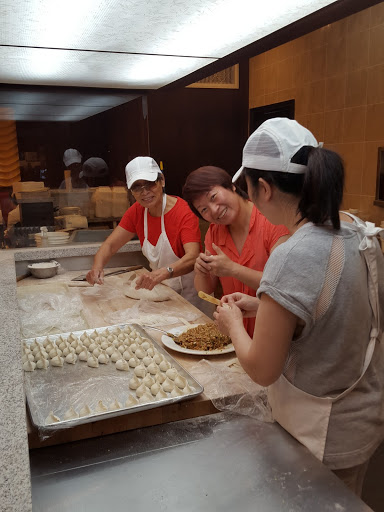
Why yes, we ate all those dumplings...
6. Bring something back
Cultural travel changes how you teach your students, how you talk to your kids, how you see your own neighborhood. That is the test. Bring back your cultural awareness, humility, travel stories, new recipes and foods, art, photos, and new passions (who knew that learning ikebana in Japan would change your entire life? Ask me how I know).
Joyfully share your cultural travel learnings and new ways of being – you’ll inspire countless people to explore cultural travel themselves.
Where cultural travel happens
It happens everywhere, if you are open to learning. The specific destinations matter less than the slow, patient, asking practice that allows any place to teach you something. That said, some destinations make the practice easier than others. Insular cultures should be approached respectfully and with humble curiosity and friendship (which, if you’re reading this, you will practice anyway!).
For deeper travel writing on these places, our Through the Eyes of an Educator columns by educator Stacey Ebert has shared this practice and mindset here for over a decade.
If you're traveling with kids, I have written a companion article on Places to Travel with Family: Nine Trips That Teach Your Kids Something Real. I think you'll like it! It's a love letter to family travel (and our family).
Trips that teach cultural travel will come more easily to you the more you practice. Soon, you won’t be able to imagine exploring the world any other way. Isn’t that marvelous?
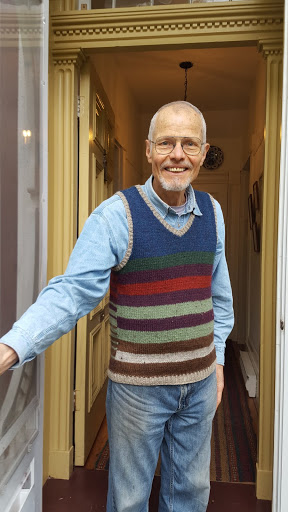
Our friend, Stratford artist Gerard Brender à Brandis welcoming us in
How to know you are doing it well
The simplest check: come home and wait a year. Can you still describe a specific moment from the trip?
The taste of pineapple crush at Chess's in St. John's. The smell of brown bread baking at Ballymaloe. The weight of a velvet costume in your hands at the Stratford Costume Warehouse. The shape of a conversation you had with the pitmaster about their techniques, ingredients, and what kind of wood they use for smoking (if you’re like me, you are still messaging with them, geeking out about all the yumminess you each are making). The neighborhood pub that taught you about what local ale tastes good to you – and why.
If yes, you went deep.
If a year later you cannot describe a single specific moment from a three-week, eight-city tour, that was tourism. Tourism is fine (we’ve all been there). It is also not what this guide is about.

Cultural travel is a way of being in a place. Once you learn how, every trip that follows will be richer than you ever imagined.

Rickshaw in Japan. From History Comes Alive in Tokyo.
What cultural travel has stayed with you? Where did you go, and what did the place teach you?
Further educational family travel resources I've written here on Wandering Educators:
Places to Travel with Family: Nine Trips That Teach Your Kids Something Real
Educational Family Trips: How to Raise Kids Who Love to Learn While Traveling
Historic Walking Tours: How to Find (and Savor) the Best in Any City
10 Ways to Raise an Intercultural Child
The Importance of International Experiences
Why We Love Traveling with our Daughter
History Tours Worth Taking: An Educator's Guide to Traveling Through the Past
Cultural Immersion Travel: A Guide to Being Welcomed In
Walking the Black Heritage Trail: History, Stories, and How to Visit
Jessie Voigts is the founder and publisher of Wandering Educators. She has a PhD in International Education, has lived and worked in Japan and London, and traveled around the world. She is constantly looking for ways to increase intercultural understanding, and is passionate about study abroad and international education.
Find her online via Instagram, Facebook, or LinkedIn